Mohamed Boumeshoul, founder · Updated November 2026
Jewish people in Morocco have been part of this country for close to two thousand years, longer than Islam and longer than any Moroccan dynasty. In 1948 around 265,000 Jews lived here, more than in any other Muslim country. Today the community is small, roughly 1,000 to 2,000 people, most of them in Casablanca. Even so, their story is everywhere: in the mellahs of the old cities, in the music, in the food, and in the many Moroccans who will tell you about the Jewish neighbors their grandparents grew up with.
This guide covers that history and the community today. For visiting synagogues and cemeteries city by city, see our separate guide to Jewish heritage sites in Morocco.
In this guide
How Jewish life in Morocco began
Moroccan Jewish families often say their ancestors arrived after the destruction of the First Temple in Jerusalem in 586 BCE. It is a strong tradition, but there is no firm proof of it. The earliest hard evidence is from Roman times: Hebrew inscriptions on gravestones at Volubilis, the Roman city near Meknes.
Over the following centuries, Jewish communities grew in the cities and also deep in the countryside. In the Atlas Mountains and the Draa and Todra valleys, many Jews lived in Amazigh (Berber) villages, spoke Tamazight and worked as silversmiths, traders and craftsmen. Some families stayed in the same village for many generations.
Scholars, exiles and the mellahs
Fes became one of the great centers of Jewish learning in the Middle Ages. The philosopher and rabbi Maimonides, born in Córdoba in 1138, lived in Fes with his family for several years around 1160, at a time when the Almohad rulers pressed Jews and Christians to convert.
In 1438, the Jews of Fes were moved from the old medina to a new quarter beside the royal palace in Fes el-Jdid. That quarter was called the mellah, and the name later spread to Jewish quarters across Morocco. The mellahs of Marrakech, Meknes, Rabat, Essaouira and other cities followed over the next centuries.
After 1492, when Spain expelled its Jews, thousands crossed to Morocco. These newcomers, called megorashim (the expelled), brought Spanish customs, prayers and family names. The Jews already living here were the toshavim (the residents). For a long time the two groups kept separate synagogues and traditions, before slowly blending into one Moroccan Jewish culture.
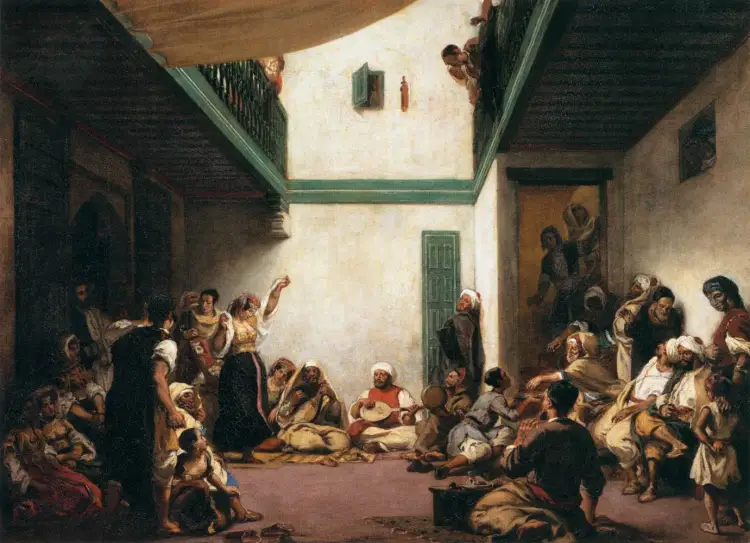
The painting above is by Eugène Delacroix, who came to Morocco in 1832 and attended a Jewish wedding in Tangier. His Jewish Wedding in Morocco now hangs in the Louvre.
Life in the mellah
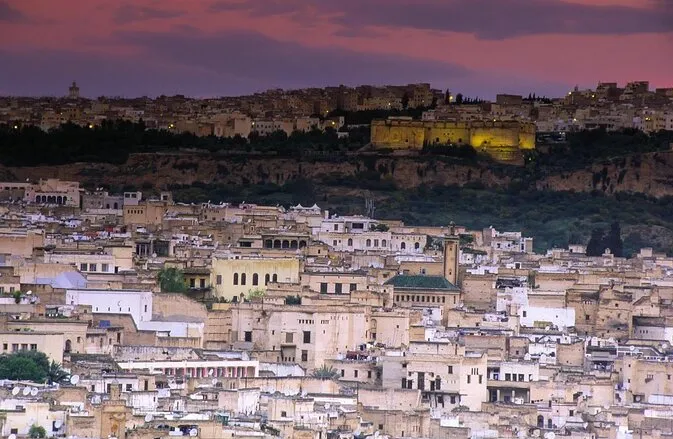
A mellah was a walled quarter with its own gate, synagogues, schools, ovens, baths and cemetery. Houses faced outward with wooden balconies and windows on the street, unlike the inward-facing Muslim houses of the medina. You can still see this in the Fes Mellah today.
Life inside was crowded and often poor, but it was also full of trade. Jewish jewelers, tailors, tinsmiths and money changers worked with Muslim customers every day, and many Moroccan crafts, especially silver jewelry and gold embroidery, carry Jewish hands in their history. Many of these crafts are still made by hand today, and you can find lanterns, metalwork and other handmade pieces at our sister shop Morocco Products.
In Essaouira, the sultan invited Jewish merchant families in the 18th century to run trade with Europe, and for much of the 1800s Jews were a large share of the town’s people, by some counts close to half. The town’s mellah, synagogues and cemetery by the sea come from that time.
Language shows the mix too. Jews in most cities spoke their own form of Moroccan Arabic, in the mountains they spoke Tamazight, and in the north, in Tetouan and Tangier, many spoke Haketia, a Judeo-Spanish dialect brought from Spain.
Traditions that are still alive
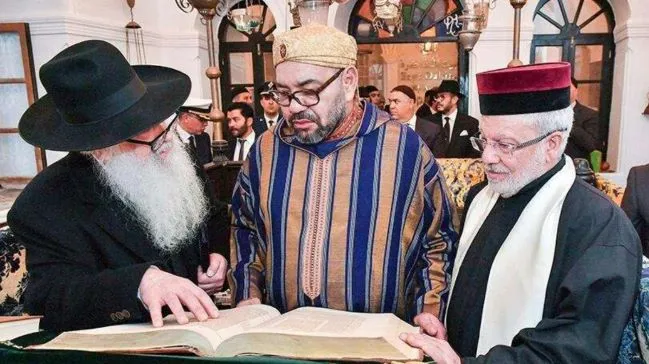
Mimouna. On the night Passover ends, Moroccan Jewish families open their doors and lay out a table of sweets, flour, honey and mufleta, a thin pancake. Muslim neighbors traditionally brought the first flour and milk after the holiday. Moroccan Jews took Mimouna with them to Israel, France and Canada, where it is now a big public celebration.
Hiloula pilgrimages. Moroccan Jews honor righteous rabbis, called tzaddikim, at their tombs. Each year, families from abroad return for the hiloula of rabbis such as Haim Pinto in Essaouira and Amram Ben Diwan near Ouezzane, with candles, prayers, music and big shared meals.
Food. The slow-cooked Shabbat stew dafina (or skhina), fish with peppers and coriander, and pastries for the festivals are all part of Moroccan Jewish cooking. Our guide to kosher food in Morocco covers what to eat and how to keep kosher while you travel.
Music, writing and public life
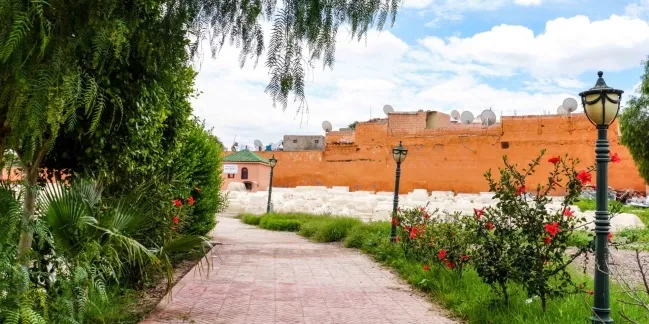
Moroccan Jews shaped the country’s music. Zohra El Fassia, born in Sefrou in 1905, was one of the first women in Morocco to make records and sang at the court of Mohammed V. Samy Elmaghribi, from Safi, filled concert halls in the 1950s with songs that Moroccans of every faith still know. Today singers such as Neta Elkayam, born in Israel to Moroccan parents, are bringing those old songs back.
In literature, Edmond Amran El Maleh, born in Safi in 1917, wrote about the Moroccan Jewish world in French. In public life, André Azoulay, born in Essaouira, has served for decades as an adviser to the King and has been a leading voice for the preservation of Essaouira’s Jewish heritage.
The 20th century and the great departure
During the Second World War, when Morocco was under French Vichy rule, anti-Jewish laws were applied here too. Many Moroccan Jews remember Sultan Mohammed V for refusing to support the harshest measures and for publicly treating Jews as his subjects like any others. Historians still discuss how much he could do under French control, but the memory is strong and is a big part of how the community sees its relationship with the monarchy.
After the creation of Israel in 1948 and Morocco’s independence in 1956, most Jews left over the next two decades. Some left for religious or family reasons, some out of fear after riots and wars in the region, some for economic reasons. Between 1961 and 1964 alone, close to 90,000 left for Israel under an agreement known as Operation Yachin. Others went to France, Canada (especially Montreal), Spain and the United States.
The result is a large Moroccan Jewish diaspora, with hundreds of thousands of people in Israel alone who trace their roots here. Many of them still speak Darija at home, cook Moroccan food and keep Moroccan family customs.
The Jewish community in Morocco today
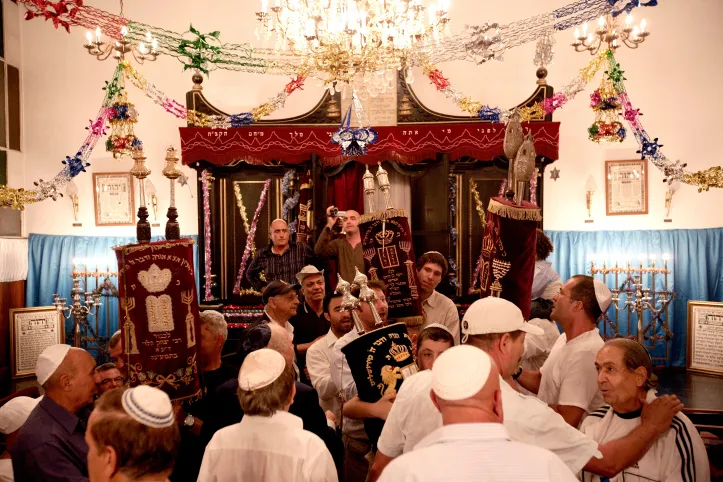
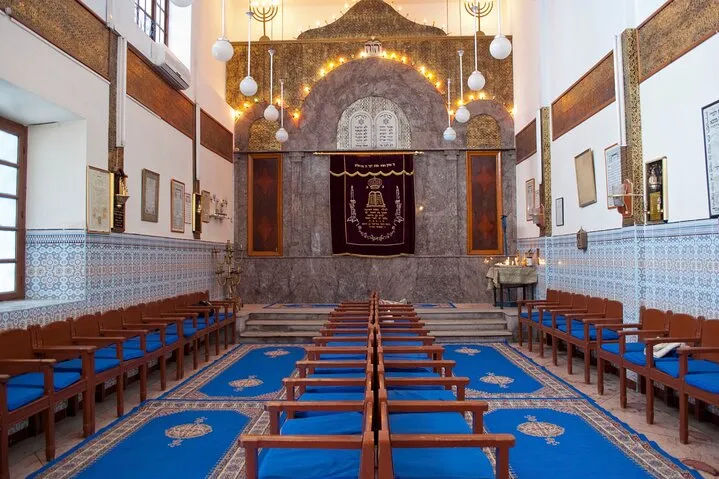
The community that remains is small but organized, with synagogues, kosher food and community services in Casablanca, and smaller groups in Marrakech, Rabat, Fes, Tangier and Essaouira. The Museum of Moroccan Judaism in Casablanca, opened in 1997, is often described as the only Jewish museum in the Arab world.
Morocco’s 2011 constitution names the Hebrew heritage as one of the elements of Moroccan identity. Since 2010 more than 160 Jewish cemeteries have been restored, in 2017 the old street names of the Marrakech Mellah were brought back, and in 2020 Bayt Dakira, a house of memory for Jewish and Muslim life, opened in the Essaouira medina.
When you walk through a mellah with a local guide today, you will hear this history told by Muslims and Jews alike, often with real affection.
Visiting Jewish Morocco
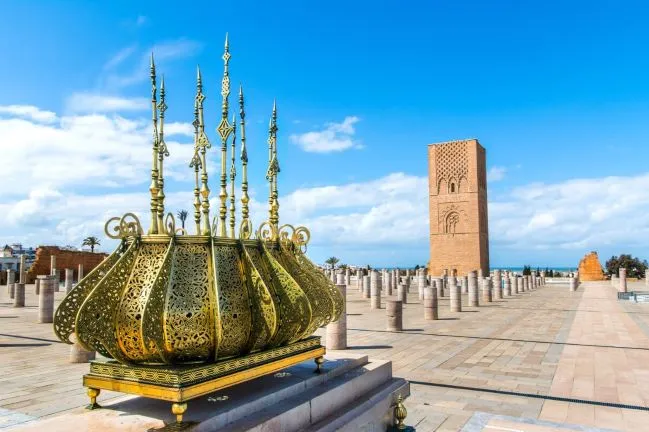
Most visitors start in Casablanca, then go on to Rabat, Fes, Meknes, Marrakech and Essaouira, the cities with the most to see. Many synagogues are cared for by a local keeper rather than open to the public at set times, so going with a guide who knows the families makes a real difference.
We plan private trips around this history. The 10-day Jewish heritage tour covers Fes, Marrakech and Essaouira, and the shorter 7-day tour from Casablanca to Fes suits travelers with less time. All our Morocco Jewish tours can be built around Shabbat, kosher meals and family roots visits.
FAQ
How many Jews live in Morocco today?
Estimates range from about 1,000 to 2,000 people, most of them in Casablanca. In 1948 there were about 265,000.
When did Jews first come to Morocco?
Tradition says after 586 BCE. The oldest proven evidence is Hebrew inscriptions at Volubilis from the Roman period. A second large wave came from Spain after 1492.
What is a mellah?
The Jewish quarter of a Moroccan city. The first one was created in Fes in 1438. The word comes from the Arabic for salt, and there are several stories about why.
Is Morocco safe for Jewish travelers?
Jewish travelers visit Morocco every year, many with family roots here. Read our safety guide for American, Jewish and women travelers for practical advice.
Plan your private Morocco trip
Our local team plans private tours around your dates, pace and interests, with support 24/7. Explore our Morocco tour ideas or ask us to plan your trip.