Morocco Top Trips · Updated 30 October 2026

Food is one of the best reasons to travel in Morocco. Not because it is fancy, but because it is generous: a tagine that has been bubbling since the morning, bread still warm from the neighbourhood oven, mint tea poured from a height so it foams in the glass. This guide covers the dishes worth looking for, where to find them, and a few practical things that help if you have dietary needs.
What makes Moroccan food taste Moroccan
Moroccan cooking grew out of Amazigh (Berber) traditions, with layers added over the centuries by Arab, Andalusian, Jewish and later French cooks. The result mixes sweet and savoury more than most cuisines do, so you will meet meat cooked with prunes, dates or honey, and pastries dusted with cinnamon and sugar.
Spices do a lot of the work, but the food is rarely fiery. The everyday set is cumin, ginger, sweet paprika, turmeric, cinnamon and black pepper, with saffron for special dishes. Ras el hanout, which means “head of the shop”, is a house blend that each spice seller mixes their own way. Preserved lemons and green or purple olives give many tagines their sharp, salty edge.
Dishes to try in Morocco
Tagine
A tagine is both the dish and the conical clay pot it is cooked in. The lid traps the steam, so meat and vegetables cook slowly in their own juices. Classic versions to look for are chicken with preserved lemon and olives, lamb or beef with prunes and almonds, and kefta (meatballs) in tomato sauce with an egg cracked on top. You eat it with bread rather than a fork, tearing off a piece and using it to scoop.
Couscous
Couscous is the dish of Friday. Families traditionally eat it at lunch after the midday prayer, piled high with vegetables and meat, so it is easiest to find in restaurants on Fridays. The grains are steamed several times over the stew, which is why homemade couscous is so much lighter than the packet version. Look out for couscous with seven vegetables, or the sweet tfaya topping of caramelised onions and raisins.
Pastilla
Pastilla (also written bastilla or b’stilla) is a pie of thin warqa pastry filled with spiced chicken, or traditionally pigeon, with almonds and egg, then dusted with icing sugar and cinnamon. It sounds odd and tastes wonderful. Fes is famous for it, and you will also find a seafood version without the sugar.
Tangia
Tangia is Marrakech’s own dish. Beef or lamb is packed into a tall clay urn with preserved lemon, garlic, cumin and saffron, then cooked for hours, traditionally in the hot ashes of the hammam furnace. The meat comes out soft enough to pull apart with bread. You will find it in the small grill restaurants around Jemaa el-Fna and the medina.
Harira
Harira is a thick soup of tomato, lentils, chickpeas and herbs, often with a little meat. It is eaten all year, but during Ramadan it is the dish that breaks the fast at sunset, served with dates, boiled eggs and sticky chebakia pastries.
Rfissa and mechoui
Rfissa is a comforting dish of shredded msemen (flatbread), lentils and chicken in a broth flavoured with fenugreek, usually made for family celebrations. Mechoui is whole lamb slow-roasted until the meat falls off the bone, eaten with salt and cumin. Both are worth ordering if you see them.
Street food and breakfast
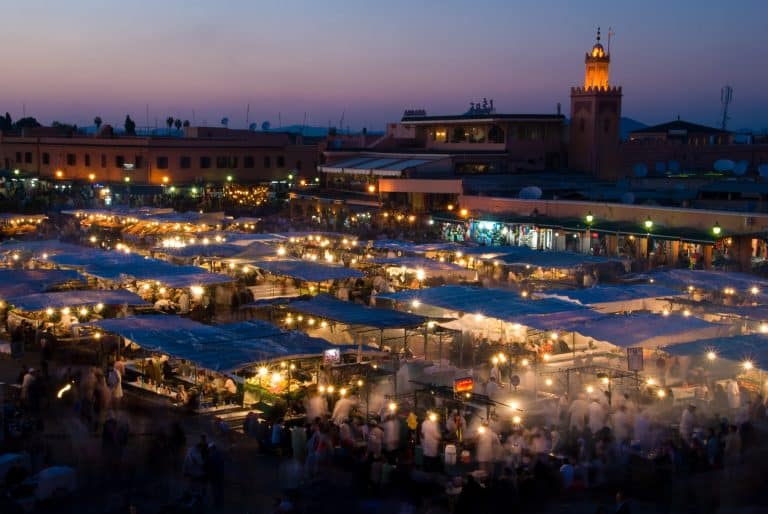
Some of the best eating in Morocco costs very little. In the mornings look for bessara, a warm fava bean soup with olive oil and cumin, and msemen or baghrir (pancakes) with honey and butter. In the evening, the food stalls at Jemaa el-Fna in Marrakech serve grilled skewers, sausages, fried fish and bowls of snail soup, which locals swear by for digestion. Our guide to Moroccan street food goes into more detail.
A good rule for street food: eat where locals are queueing, and choose stalls where food is cooked fresh in front of you.
Sweets and mint tea
Moroccan pastries lean on almonds, honey, sesame and orange blossom water. Try kaab el ghzal (gazelle horns), crescent pastries filled with almond paste, and chebakia, fried sesame flowers soaked in honey. Pastry shops sell them by weight, so you can mix a small box.
Mint tea is offered everywhere, from carpet shops to riad terraces. It is green tea brewed with fresh mint and, usually, a lot of sugar. If you prefer it less sweet, just ask for “shwiya sukar” (a little sugar) when it is being made.
If you are vegetarian, vegan or halal
- Vegetarians eat well in Morocco: vegetable tagines and couscous, zaalouk (smoky aubergine and tomato), taktouka (peppers and tomato), lentils, salads and plenty of bread. Ask whether a dish is made with meat stock, as some are.
- Vegans should watch for butter (smen) and honey in pastries and breakfasts.
- All meat served in Morocco is halal, and pork is very rare.
- Alcohol is served in licensed restaurants and hotels, but many local restaurants don’t serve it.
- If you have allergies, especially to nuts, tell your guide and the kitchen, since almonds turn up in many dishes.
Where to eat
Some of the best meals you will have in Morocco are home-style dinners in a riad, where the cook makes a few dishes for a handful of guests. Small family restaurants in the medinas are another good bet: short menus, usually a few tagines and a couscous on Fridays. In the bigger cities you will also find modern Moroccan restaurants that play with the classics.
Your driver and guides know where locals eat on the road too, which is often where you will find the best tagine of the trip. For something hands-on, a Moroccan cooking class is a fun way to learn the basics and take a recipe home.
Quick answers
What should I try first in Morocco?
Start with a chicken tagine with preserved lemon, couscous on a Friday, pastilla, harira and a glass of mint tea. If you are in Marrakech, add tangia.
Is Moroccan food spicy?
Generally no. It is well spiced but rarely hot. Harissa or chilli is usually served on the side if you want more heat.
Where is the best street food?
Jemaa el-Fna in Marrakech is the famous one, but the medinas of Fes, Essaouira’s fish grills by the harbour and the market streets of every town have excellent food stalls.
More food guides
Taste Morocco on a private tour
The easiest way to eat well in Morocco is with people who know where to go. On our 10-day private tour from Marrakech you’ll try city food, mountain dishes and a desert dinner under the stars, and we can add a cooking class or food walk to any of our tours.