Morocco Top Trips · Updated 6 November 2026
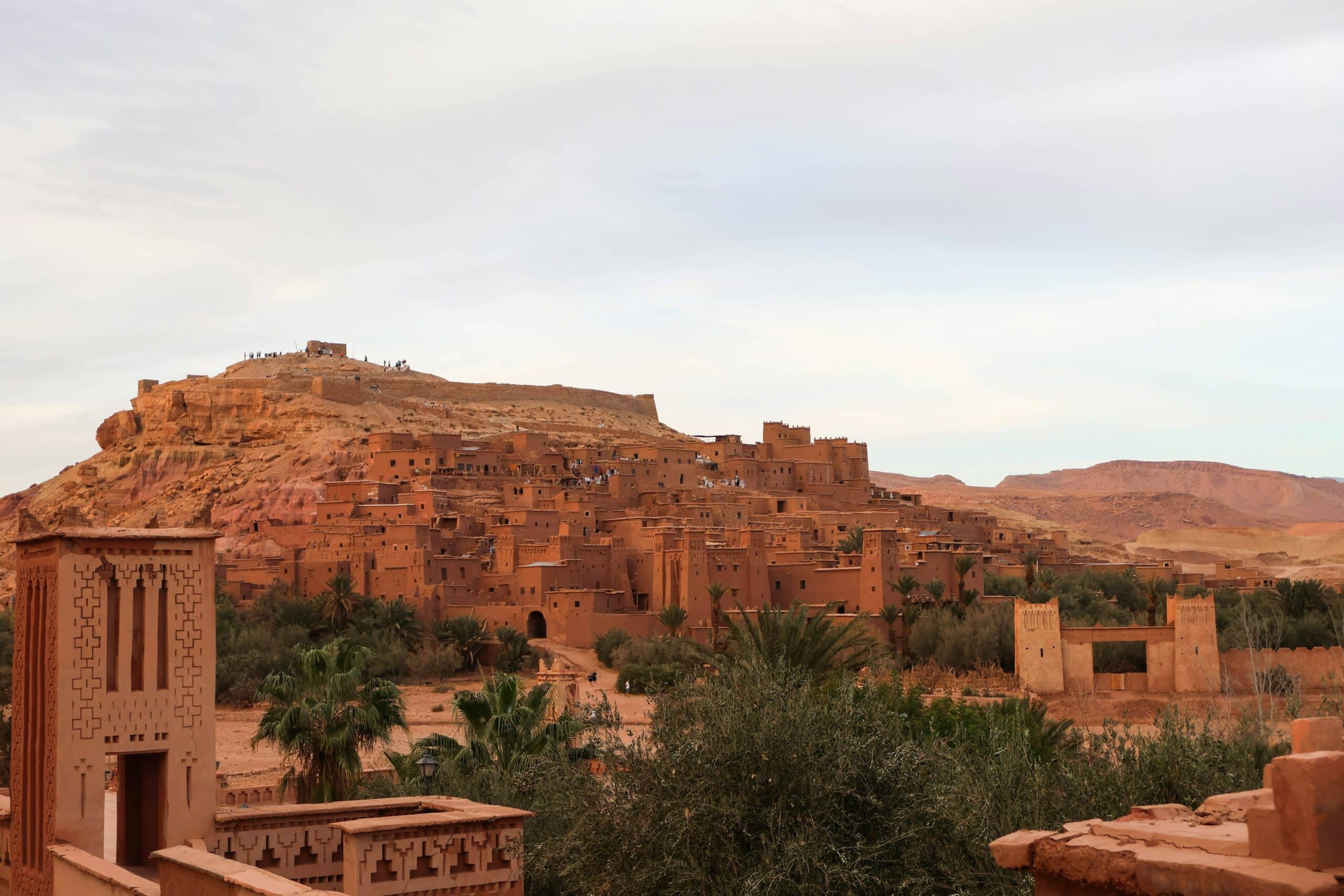
Ait Ben Haddou is the earthen village you have probably seen before you ever set foot in Morocco. It sits on a hillside above the Ounila River, a stack of mud-brick houses and towers climbing to an old granary at the top, and over the years it has played Jerusalem, a Roman province and the slave city of Yunkai in Game of Thrones.
We pass it most weeks of the year on our desert routes, and it still makes guests go quiet when it comes into view. This guide covers the ksar’s history, why UNESCO protects it, the films shot here, the drive from Marrakech over the Tizi n’Tichka pass, the best time of day to walk up, and what to see in nearby Ouarzazate.
Last checked: November 2026. Road conditions and local arrangements change, so please confirm on the ground before you travel.
In this guide
A short history of the ksar
A ksar is a fortified village: family houses, a few larger kasbahs, a mosque and shared spaces, all packed inside one outer wall. Ait Ben Haddou grew up on the old caravan route between Marrakech and the Sahara. Traders crossing the High Atlas with salt, dates, gold and other goods stopped here by the river, at the foot of the mountains, to rest, trade and pay for safe passage.
People have lived on this hill for a very long time, but the buildings are younger than they look. Mud brick needs repairing after every heavy rain, and most of what stands today is thought to date from the 17th century or later. At the very top is the agadir, the communal granary, where families stored grain behind the strongest walls in case of attack.
When the French built the modern road over the Tizi n’Tichka in the 1930s, the caravans stopped coming this way. Over the following decades most families moved across the river into the new village, where there is electricity and running water. Only a handful of families still live inside the old walls.

Why it is a UNESCO World Heritage Site
UNESCO added the Ksar of Ait-Ben-Haddou to the World Heritage list in 1987. It is one of the best-preserved examples of the earthen architecture of southern Morocco: thick rammed-earth and mud-brick walls, corner towers decorated with geometric patterns, and narrow lanes that climb the hill between the houses.
The listing protects more than a pretty view. It protects a way of building that is disappearing as families move into concrete homes. Repairs are still done the old way, with earth, straw and palm or poplar beams, so it is normal to see a wall being patched after a storm. It is one of several UNESCO World Heritage Sites in Morocco that fit easily into a private tour.
Films and TV shows shot at Ait Ben Haddou
Film crews found Ait Ben Haddou in the early 1960s and kept coming back. The light is beautiful, the ksar looks ancient from every angle, and the film studios in Ouarzazate are half an hour down the road. Some of the best-known productions filmed here:
- Lawrence of Arabia (1962)
- Jesus of Nazareth (1977)
- The Jewel of the Nile (1985)
- The Living Daylights (1987), the James Bond film
- The Mummy (1999)
- Gladiator (2000), where the ksar became the provincial town where Maximus first fights in the arena
- Kingdom of Heaven (2005) and Prince of Persia: The Sands of Time (2010)
- Game of Thrones, where it played Yunkai in season three
Local guides love pointing out where scenes were shot, and many villagers have worked as extras over the years. Ask around and you may meet someone who stood in a crowd behind Russell Crowe.
Getting there from Marrakech over the Tizi n’Tichka
Ait Ben Haddou is about 180 km from Marrakech. With a couple of short stops, the drive takes around three and a half to four hours, and it is one of the most beautiful roads in the country.
You leave Marrakech on the N9, pass Ait Ourir and start climbing into the High Atlas. The road winds up through walnut and oak trees, then past Taddert the slopes turn bare and rocky. At the top is the Tizi n’Tichka pass, 2,260 meters above sea level. In winter, snow can close the pass for a few hours or longer, so keep a little flexibility in your plans between December and March.

After the pass you have two options. The main N9 continues south to the turn-off for Ait Ben Haddou. The slower and more scenic road leaves the N9 about 20 km after the pass and goes through Telouet, where the old Glaoui kasbah is slowly crumbling, then follows the green Ounila Valley for about 36 km down to Ait Ben Haddou. It takes longer and the surface can be rough in places, but when it is in good shape our drivers prefer it.
Most of our tours cross the Atlas on the way to or from the Sahara, so Ait Ben Haddou becomes a stop on the road rather than a separate trip. A day trip from Marrakech is possible, but it means about seven hours of driving in one day.
The best time of day to visit
Late afternoon is our favorite time. Day-trip groups from Marrakech usually arrive around midday, and most have gone by about 3 pm. After that the lanes go quiet, the heat eases and the walls turn deep orange as the sun drops. Start climbing to the granary about an hour before sunset for the view over the valley.
Early morning is the other good window, especially if you sleep in one of the guesthouses facing the ksar. The light is soft, it is cool enough for the climb, and you may have the top almost to yourself.
Try to avoid the middle of the day in summer. From June to August it gets very hot here and there is little shade on the way up. Spring and autumn are the most comfortable seasons. Winter days are often clear and pleasant, but the nights are cold.
Walking up the ksar: what to expect
From the new village you cross the river on a footbridge, or on stepping stones when the water is low. A path then winds up through the lanes to the granary. Allow around half an hour to reach the top at an easy pace. The steps are uneven, so wear proper shoes.

Walking around the ksar is generally free. A few families who still live inside open their homes to visitors and ask for a small contribution, and in the lanes you will meet painters who make pictures with saffron, tea and indigo that change color when they are warmed over a flame. None of it is compulsory, and a smile and a polite “no, thank you” is always fine.
A local guide makes a big difference here. In an hour with someone who grew up in the village, you learn which families own which houses, how the walls are rebuilt, and what life was like before the road moved. We can include one on any of our routes.
Ouarzazate, half an hour away
Ouarzazate is about 30 km from Ait Ben Haddou, roughly half an hour by car. It is the main town of the region and the gateway to the Draa Valley, the Dades Valley and the road east to the dunes.
Atlas Studios
On the edge of town, on the Marrakech road, Atlas Studios is a working film studio that also runs guided visits. You walk between old sets, from Egyptian temples to desert palaces, left over from productions filmed in the region.
Kasbah Taourirt
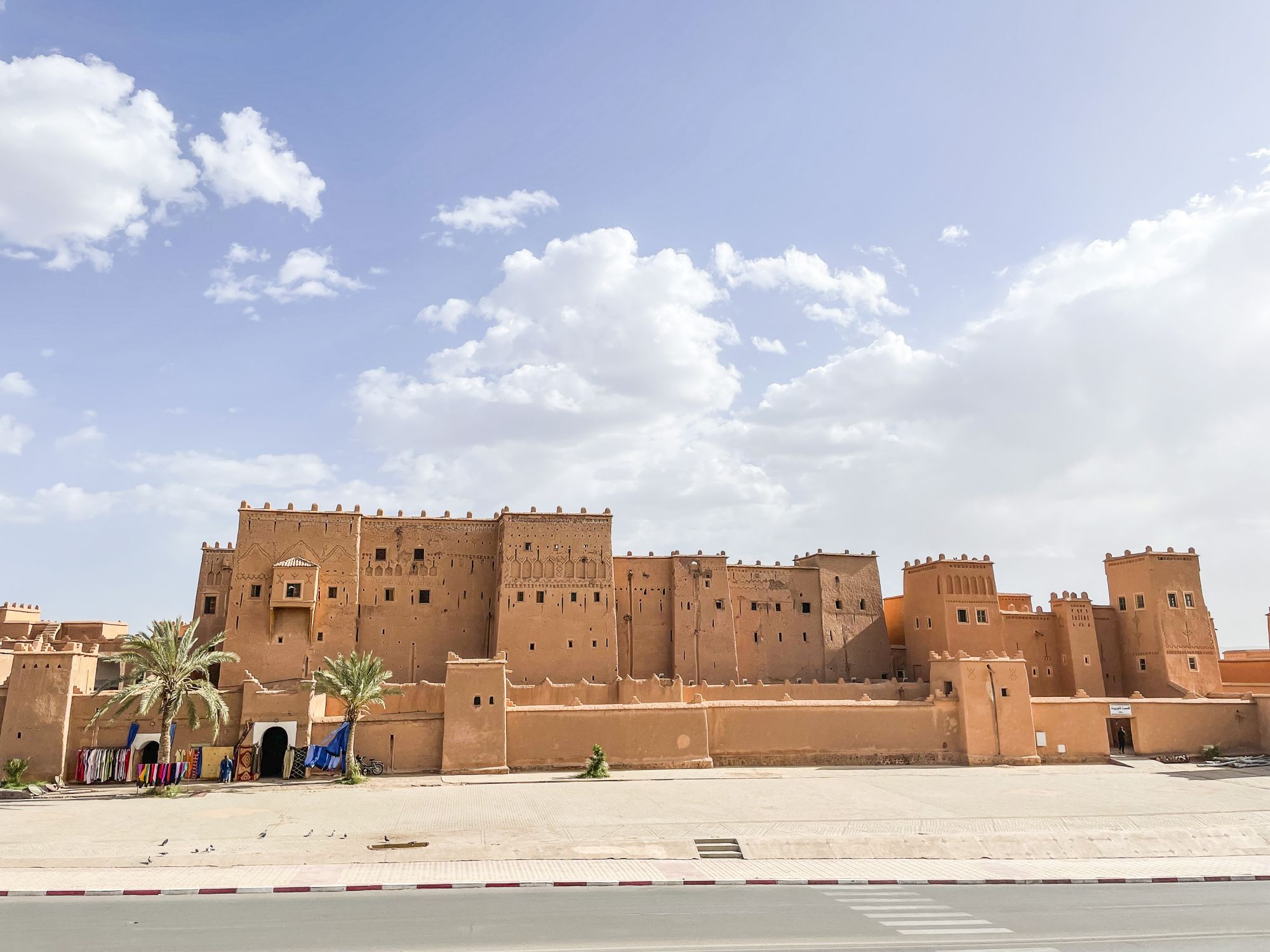
In the center of town, Kasbah Taourirt belonged to the Glaoui family, who controlled the Atlas passes in the early 20th century. Part of it is open to visitors, with painted ceilings and carved plaster.
If you would like to sleep near Ait Ben Haddou and see it at both sunset and sunrise, we can build that night into your route.
Our tours that stop at Ait Ben Haddou
Ait Ben Haddou is on almost every route we drive between Marrakech and the Sahara. A few good places to start:
- 2-Day Private Zagora Desert Tour from Marrakech: Ait Ben Haddou and the Draa Valley on the way to a night in the Zagora desert.
- 3-Day Private Merzouga Desert Tour from Marrakech: Ait Ben Haddou on day one, then the Dades Valley, Todra Gorge and the Erg Chebbi dunes.
- 6-Day Private Morocco Tour from Marrakech: a slower loop to the Sahara and back, with time in Marrakech.
- 9-Day Private Morocco Tour from Tangier: the north, Fes and the desert, crossing the Atlas via Ouarzazate and Ait Ben Haddou on the way to Marrakech.
Every tour is private and can be changed, so if you want more time here or a night in the village, just tell us. Our Marrakech desert tours page lists every route from Marrakech.
Frequently asked questions
Is Ait Ben Haddou worth visiting?
Yes. It is one of the best-preserved earthen villages in Morocco and sits right on the road between Marrakech and the Sahara, so it adds very little time to a desert trip.
How long do you need at Ait Ben Haddou?
About two hours is enough to cross the river, climb to the granary and walk back down slowly. Stay longer, or overnight, if you want to see it at sunset.
Do people still live in Ait Ben Haddou?
A few families still live inside the old ksar. Most of the community moved to the new village across the river, where there is electricity and running water.
Can you visit Ait Ben Haddou as a day trip from Marrakech?
Yes, but it is a long day, with about seven hours of driving over the Tizi n’Tichka. It is more relaxed as the first stop on a 2- or 3-day desert tour.
Is there an entrance fee?
Walking around the ksar is generally free. Some families charge a small fee to visit their homes, and guides and the Ouarzazate sights are paid separately.
Related reading
- UNESCO World Heritage Sites in Morocco
- Marrakech to Merzouga: planning your desert trip
- Atlas Mountains trekking: Toubkal, Imlil and the best valleys
- The best time to visit Morocco
Plan your private Morocco trip
Our local team plans private tours around your dates, pace and interests, with support 24/7. Explore our Morocco tour ideas or ask us to plan your trip.