

Mohamed Boumeshoul, founder · Updated November 2026

Do Americans need a visa for Morocco?
No. US citizens can visit Morocco as tourists for up to 90 days without a visa. There is nothing to apply for and nothing to pay. You need a passport with at least six months of validity when you enter and one blank page for the entry stamp.
Last checked: November 2026, against the US State Department, the UK Foreign Office and other official government travel pages. Entry rules can change at short notice, so please confirm with your embassy or the nearest Moroccan consulate before you travel.
Below you’ll find what happens at the border, quick answers for Canadian, British, Australian and Asian passports, how the Moroccan e-visa works for travelers who do need one, and what to do if you want to stay longer.
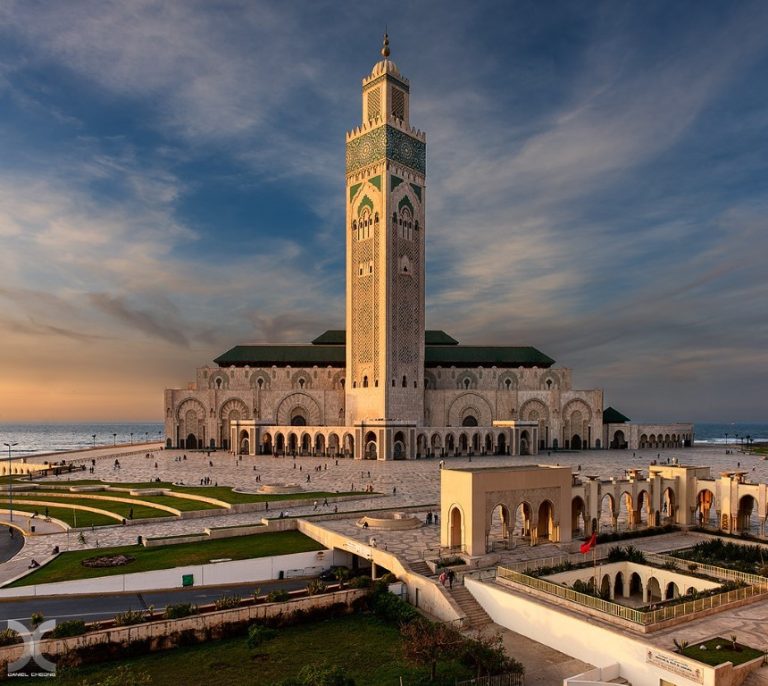
Landing in Casablanca? Start your private trip there
Visa rules for US citizens
The US State Department says visas are not required for visits of less than 90 days. There is no visa fee, no online form and no visa on arrival to buy. You show your passport at immigration, answer a couple of simple questions and receive a stamp that lets you stay for up to 90 days.
What to have ready at the border
- A passport valid for at least six months on the day you enter Morocco. This is the State Department’s guidance, and it is stricter than the rule many travelers expect.
- At least one blank page for the entry stamp.
- Your return or onward ticket and the address of your first hotel or riad. Officers don’t always ask, but it helps to have them on your phone.
No vaccinations are required to enter Morocco from the US. It is still sensible to be up to date with the routine vaccines the CDC recommends for travel.
Visa rules for other passports
Here are quick answers for the passports we see most often. They cover tourist trips only. If you’re traveling for work, study or a long stay, ask the Moroccan embassy in your country.
| Passport | Visa for a tourist trip? | Stay allowed |
|---|---|---|
| United States | No | Up to 90 days |
| Canada | No | Up to 90 days |
| United Kingdom | No | Up to 90 days |
| European Union (all 27 countries) | No | Up to 90 days |
| Australia | No | Up to 90 days |
| New Zealand | No | Up to 90 days |
| Singapore | No | Up to 90 days |
| Malaysia | No | Up to 90 days |
| Indonesia | Check with the embassy before booking | See the note below |
| Philippines | No | Up to 90 days |
| Japan | No | Up to 90 days |
| South Korea | No | Up to 90 days |
| China (mainland) | No | Up to 90 days |
| Hong Kong SAR | No | Up to 30 days |
| India | Yes: e-visa or embassy visa | Up to 30 days on the e-visa |
| Taiwan | Yes, arranged before travel | As stated on your approval |
Tourist trips only. Checked in November 2026 against government travel pages and Moroccan embassy notices. Rules change, so confirm with the Moroccan embassy or consulate in your country before you book flights.
Canada
Canadians don’t need a visa for tourist stays of up to 90 days. Travel with a passport that has at least six months left, which is what most airlines and border officers expect.
United Kingdom
British citizens can visit for up to 90 days without a visa. The UK Foreign Office says your passport must be valid for at least three months after the date you arrive, and Moroccan officers have turned away travelers with damaged passports.
European Union
Citizens of every EU country can visit Morocco for up to 90 days without a visa, on a passport. Most EU governments advise at least three to six months of passport validity, so check your own foreign ministry’s page for the exact rule. Some EU nationals can also travel on a national ID card on certain ferry and air routes, but rules differ by country, so a passport is the safe choice.
Australia and New Zealand
Australians and New Zealanders don’t need a visa for tourist stays of up to 90 days. Bring a passport with at least six months of validity, and check Smartraveller (Australia) or SafeTravel (New Zealand) before you fly. There are no direct flights from either country, so most travelers connect through the Gulf or Europe and land in Casablanca or Marrakech.
Singapore, Malaysia, Japan and South Korea
All four passports are visa-free for tourist stays of up to 90 days. Singapore’s Ministry of Foreign Affairs confirms the 90 days for Singaporeans, and Malaysians have had visa-free entry since December 2017. Aim for six months of passport validity. Traveling as a Muslim family? Our Muslim-friendly Morocco tours are planned around prayer times and halal meals. For flights, the best season and route ideas, read our guide to visiting Morocco from Singapore and Malaysia.
The Philippines
Filipino passport holders can visit Morocco without a visa for up to 90 days. Your airline may still ask to see a return ticket at check-in in Manila, so keep it handy.
Indonesia
Please check this one before you book. Indonesians used to enter Morocco visa-free, but Morocco stopped that in October 2021 and some travelers were turned back at the border. We haven’t found an official notice that it has been restored, and online visa sites disagree. Ask the Moroccan Embassy in Jakarta what applies to your passport and travel dates, and get the answer in writing if you can. If you need a visa, we can send a booking confirmation and day-by-day itinerary for your application.
China and Hong Kong
Morocco dropped the visa requirement for Chinese citizens in 2016, and mainland ordinary passports can stay up to 90 days. Hong Kong SAR passports are also visa-free, but the stay is shorter: up to 30 days. If you hold a different Chinese travel document, check with the Moroccan embassy first. Planning the trip from Hong Kong or Taiwan? See our practical guide for Hong Kong and Taiwan travelers.
Taiwan
Taiwanese travelers need permission before they fly and can’t use the e-visa. In practice this means a visa confirmation letter arranged through the Moroccan Embassy in Tokyo, usually via a travel agency. Processing was paused in July 2026 and reported as reopened for tourism in late September 2026, so please check the current position and allow plenty of time.
India
Indian citizens need a visa. Since January 2023 most Indian travelers can apply online for the Moroccan e-visa, which covers a single short stay of up to 30 days. If you hold a valid US, UK or Schengen visa or a residence permit from one of the countries listed below, you also qualify for the e-visa through that route. Apply only on the official portal, at least a couple of weeks before you fly.
Arriving at Marrakech airport
Marrakech Menara (airport code RAK) is a compact airport about 6 km from the old city. Once you’re through, the drive to a riad near Jemaa el-Fna takes 20 to 30 minutes, depending on traffic.
Passport control
There is no paper arrival card to fill in; Morocco dropped those forms in 2019. Join the line for foreign passports, hand over your passport, and answer a couple of simple questions: where you are staying and for how long. Have your first night’s address ready on your phone. Check that the officer has stamped your passport before you walk away, because you can have trouble leaving Morocco without that entry stamp. When several European flights land together, the line can take an hour, so don’t plan anything tight for your first afternoon.
Money and phone
The dirham is a closed currency, so you usually can’t buy it before you leave home. The simplest option is an ATM in the arrivals hall. Take out enough for tips, a snack and the first day or two. If you carry foreign cash worth 100,000 dirhams or more, declare it when you arrive. You’ll normally find mobile phone desks in arrivals too, selling local SIM cards with data. Bring your passport, because they need it to register the SIM.
Getting into town
The airport bus (line 19) runs to Gueliz and Jemaa el-Fna, and you pay in dirhams. Taxis wait outside the terminal. They don’t use meters on this run, so agree the total fare before you get in and check it against the official rate board if there is one. Riads inside the medina are on lanes cars can’t enter, so ask your riad to send someone to meet you at the nearest drop-off point.
On our private tours from Marrakech, your driver meets you in the arrivals hall and takes you straight to your hotel or riad, so you can skip the taxi line altogether.
The Morocco e-visa: who needs it?
Travelers who do need a visa may be able to apply online through Morocco’s official e-visa portal, acces-maroc.ma, instead of going to a consulate. The e-visa is for short stays (up to 30 days) and is open to:
- Citizens of a set list of countries, such as India, Israel, Jordan, Thailand and Vietnam.
- Foreign nationals who live in the US, the UK, the EU, Canada, Australia, Japan, Norway, New Zealand, Switzerland or the UAE, with a residence permit valid for at least 180 days.
- Travelers holding a valid multiple-entry visa for the Schengen area, the US, the UK, Canada, Australia, Ireland, Japan, Norway or New Zealand.
If you hold any of the visa-free passports above, you don’t need the e-visa at all. Watch out for unofficial websites that charge a fee to “process” a visa you don’t need.
Staying longer than 90 days
To stay beyond your 90 days, ask for an extension at the local police station before your stamp runs out. Don’t simply overstay. The State Department warns that travelers who stay past 90 days without an extension must appear before a judge before they can leave, and may have to pay a fine.
Students, workers and long-term business travelers should apply for the right visa or residence permit through the Moroccan embassy or consulate at home before they go.
Money and customs rules
- The Moroccan dirham is a closed currency: you can’t take dirhams out of the country, so change only what you need.
- You can change leftover dirhams back into dollars or euros before you leave, but only with the receipts from your exchanges in Morocco.
- Declare large amounts of foreign cash when you arrive.
Frequently asked questions
Do Americans need a visa for Morocco?
No. US citizens can visit Morocco for tourism for up to 90 days without a visa. You need a passport with at least six months of validity on arrival and one blank page for the entry stamp.
How long can I stay in Morocco without a visa?
Most visa-free visitors, including Americans, Canadians, Britons and Australians, get up to 90 days per entry. Some passports get less: Hong Kong SAR passports, for example, get up to 30 days.
Does my passport need six months of validity?
For US citizens, yes: the State Department asks for six months of validity on entry. The UK Foreign Office asks British travelers for at least three months after arrival. Six months is the safe rule for everyone.
Can I get a visa on arrival in Morocco?
No. Morocco does not sell visas on arrival. Visa-free travelers simply get an entry stamp. Everyone else must arrange a visa or e-visa before they fly.
How long does the Morocco e-visa take?
Processing usually takes a few working days, but apply well before your trip and only through the official portal, acces-maroc.ma.
Do children need their own passport?
Yes. Every traveler, including babies, needs their own valid passport.
Where should I confirm the rules before I fly?
Check your own government’s travel advice page for Morocco and the website of the Moroccan embassy or consulate in your country a few weeks before departure, and again just before you fly.
Official sources
Rules can change at short notice. Before you travel, check the US State Department’s Morocco page (US citizens), the UK Foreign Office’s Morocco entry requirements (British citizens), your own government’s travel advice, and the website of the Moroccan embassy in your country.
Plan your trip
Once your passport is sorted, the fun part begins. Read our Morocco safety guide and complete guide to traveling to Morocco, or browse our private Morocco tours. Many travelers from North America fly into Casablanca, so our tours from Casablanca are a good place to start. Our team is happy to answer practical questions before you book.